

Table of contents
- How to Choose an Odoo Implementation Partner — 7 Questions to Ask
- Question 1: Do They Have Direct Experience in Your Industry?
- Question 2: Can They Demonstrate Layer 2 and Layer 3 AI Capability?
- Question 4: How Do They Manage Odoo Version Upgrades?
- Question 5: Have They Built Custom Modules?
- Question 6: Do They Work With Your Integration Requirements?
- One More Thing — Reference Clients
- Ready to Evaluate an Odoo Partner?
- Frequently Asked Questions
- Can Odoo completely replace Tally for GST filing?
- Does Odoo handle the specific product attributes of polymer trading — grade, MFI, density, packaging?
- How do we handle buying in MT and selling in KG?
- We buy from international suppliers in USD. Can Odoo handle multi-currency?
- What happens to our existing Tally data during migration?
- How long does an Odoo implementation take for a polymer trading business?
How to Choose an Odoo Implementation Partner — 7 Questions to Ask
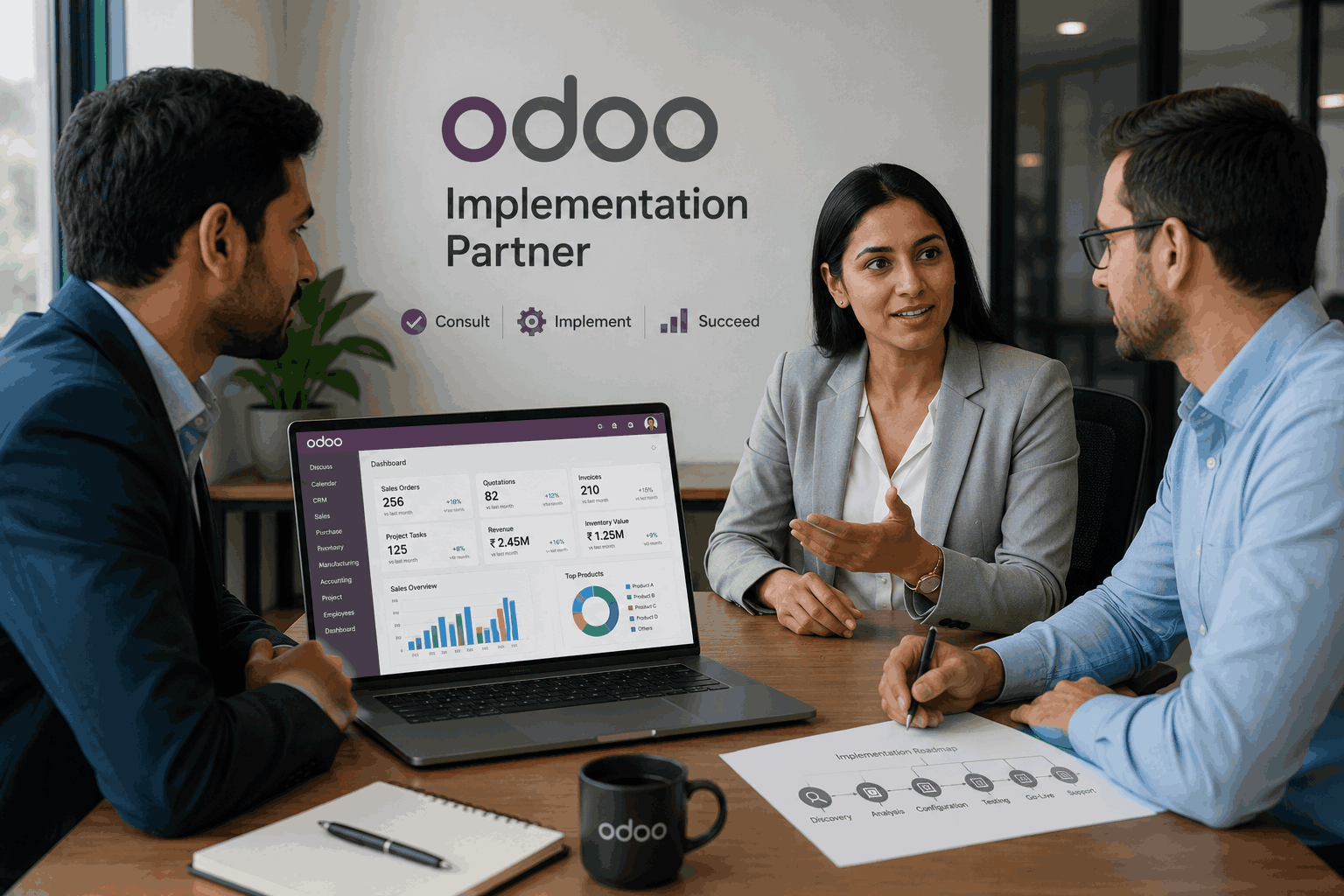
Choosing an Odoo implementation partner is one of the most consequential technology decisions a business makes. Get it right and you have a well-configured ERP that runs your operations efficiently and scales as you grow. Get it wrong and you have an expensive, poorly configured system that your team works around rather than with — and a rebuild cost to fix it.
The partner landscape ranges from highly capable, industry-specific implementers to generalist developers who have completed one or two Odoo projects. The gap in outcomes between the two is significant. These seven questions will help you tell them apart before you commit.
Question 1: Do They Have Direct Experience in Your Industry?
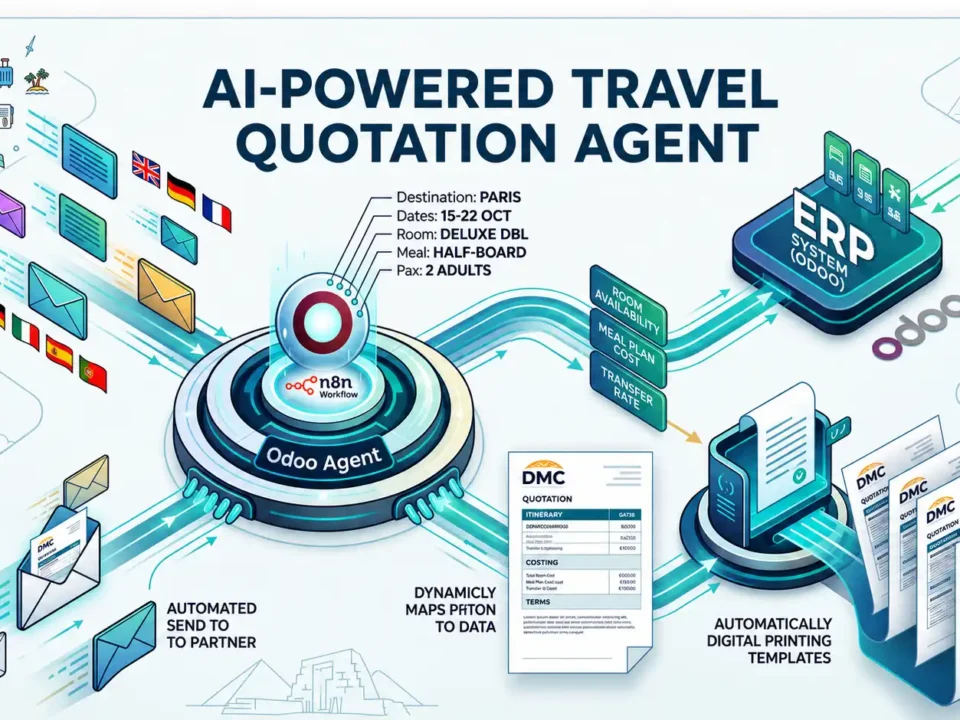
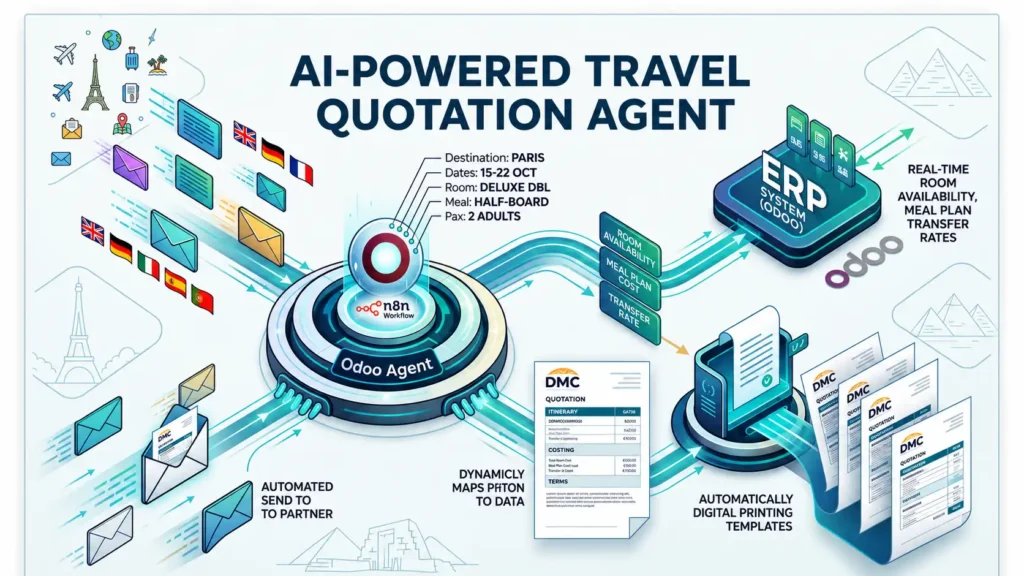
Odoo is used across hundreds of industries. But an implementation for a travel DMC is fundamentally different from one for a fintech lender or a wholesale distributor. The workflows, the compliance requirements, the integration needs and the AI automation opportunities are specific to each sector.
Ask the partner: which industries make up the majority of your Odoo implementations? How many have you completed in our sector? Can you show us a configuration example relevant to our workflows?
A good answer is specific: named industries, specific workflow examples, ideally a reference client in your sector. A weak answer is vague: 'We work across all industries' with no specifics.
Industry experience is not a bonus. It is the difference between an ERP configured for how your business actually operates and one adapted from a generic template.
Question 2: Can They Demonstrate Layer 2 and Layer 3 AI Capability?
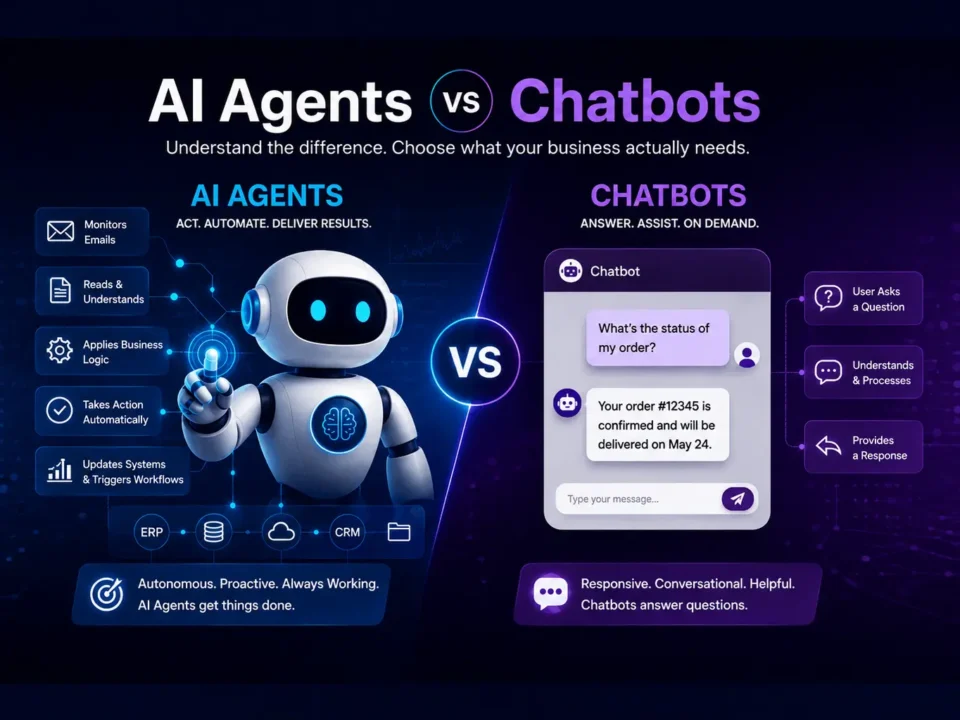
Odoo 19 brings AI capability across every module. But the businesses getting the most from it are the ones working with a partner who understands not just how to switch on features, but how to configure them for specific workflows (Layer 2) and how to build custom AI automation that runs operational processes autonomously (Layer 3).
Ask the partner: what does your Odoo AI capability look like beyond the native features? Have you built custom AI agents on top of Odoo? Can you show us an example of Layer 3 automation you have deployed?
A partner who can only demonstrate Layer 1 — switching on Odoo 19's AI features — will leave significant value on the table. The AI configuration and custom automation work is where the operational transformation happens.
Question 3: How Do They Handle Post Go-Live Support?
Go-live is not the end of an Odoo implementation — it is the beginning of the operational phase. The first 90 days after go-live typically surface configuration refinements, user adoption challenges and integration edge cases that were not apparent in testing.
Ask the partner: what does your post go-live support look like? What are your response time commitments? Is support handled by the same team that built the system, or passed to a separate support function?
A good answer includes defined SLAs, continuity of the implementation team through the transition period, and proactive monitoring rather than purely reactive ticket management.
Question 4: How Do They Manage Odoo Version Upgrades?
Odoo releases a major version every year. Each release brings new capabilities — Odoo 19's AI features being the most significant example in recent memory. A partner who does not proactively manage upgrades leaves their clients running older versions with increasingly outdated capabilities.
Ask the partner: how do you handle upgrades for existing clients? Do you audit customisations for compatibility before upgrading? How do you manage the transition for clients moving to a new major version?
A good answer involves a structured upgrade process: customisation audit, compatibility testing, staged migration and, for Odoo 19 specifically, activation and configuration of new AI features as part of the upgrade engagement rather than as an optional extra.
Question 5: Have They Built Custom Modules?
Standard Odoo modules cover a wide range of business requirements. But most businesses have at least one or two workflows where standard functionality does not quite match operational reality. A partner who can build custom modules within Odoo's architecture — and build them to survive future upgrades — is significantly more capable than one who can only configure existing modules.
Ask the partner: have you published any modules to the Odoo App Store? Can you show us custom module work you have done for clients? How do you ensure custom modules survive Odoo version upgrades?
Published App Store modules are a strong signal — they require the module to meet Odoo's technical standards and have been reviewed. Private custom modules for specific clients are equally valid.
Question 6: Do They Work With Your Integration Requirements?
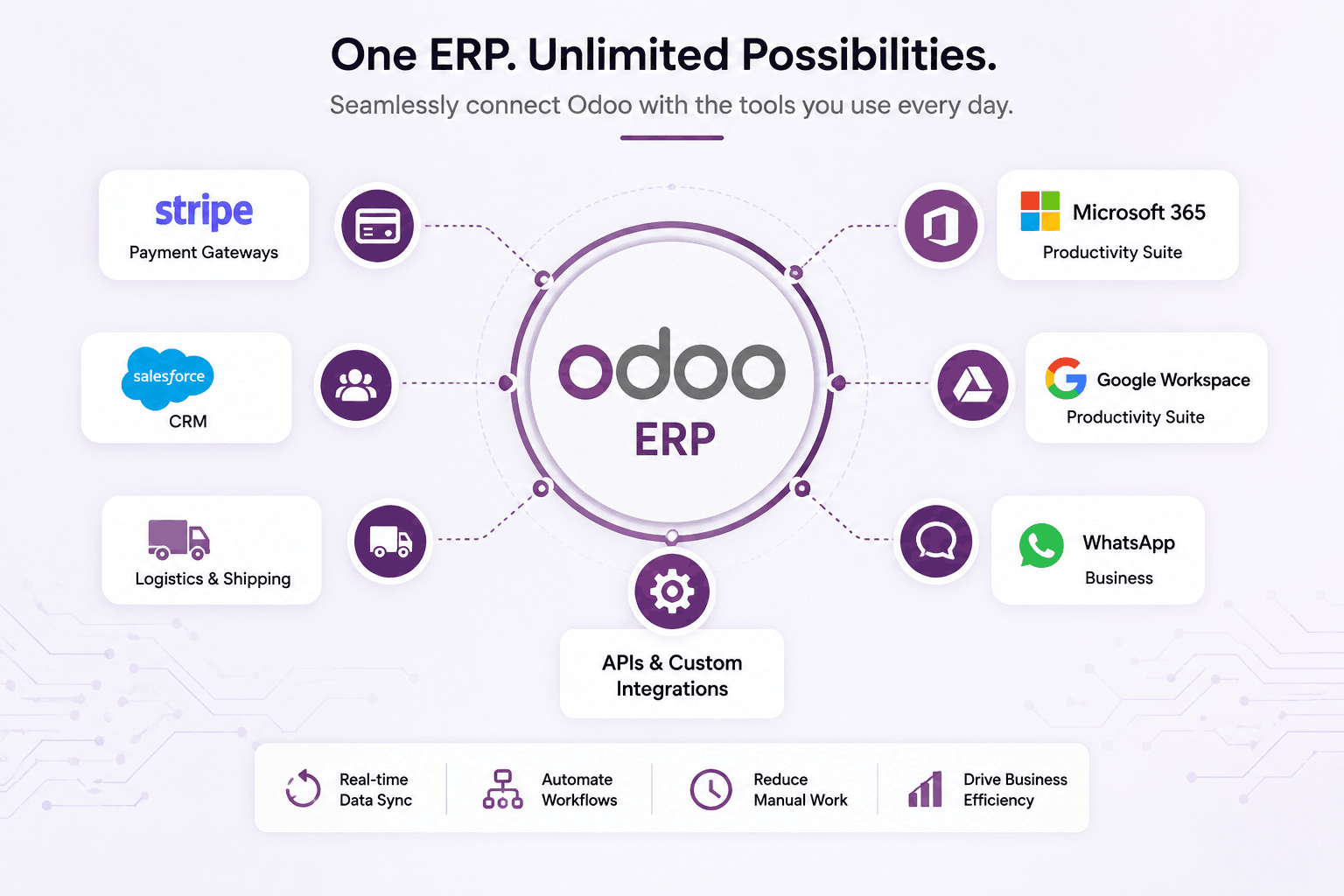
Almost every Odoo implementation involves integrating the ERP with other systems — payment gateways, communication tools, CRM platforms, logistics APIs, Microsoft 365 or Google Workspace. A partner whose capability ends at the Odoo boundary will leave you managing manual data transfer between systems.
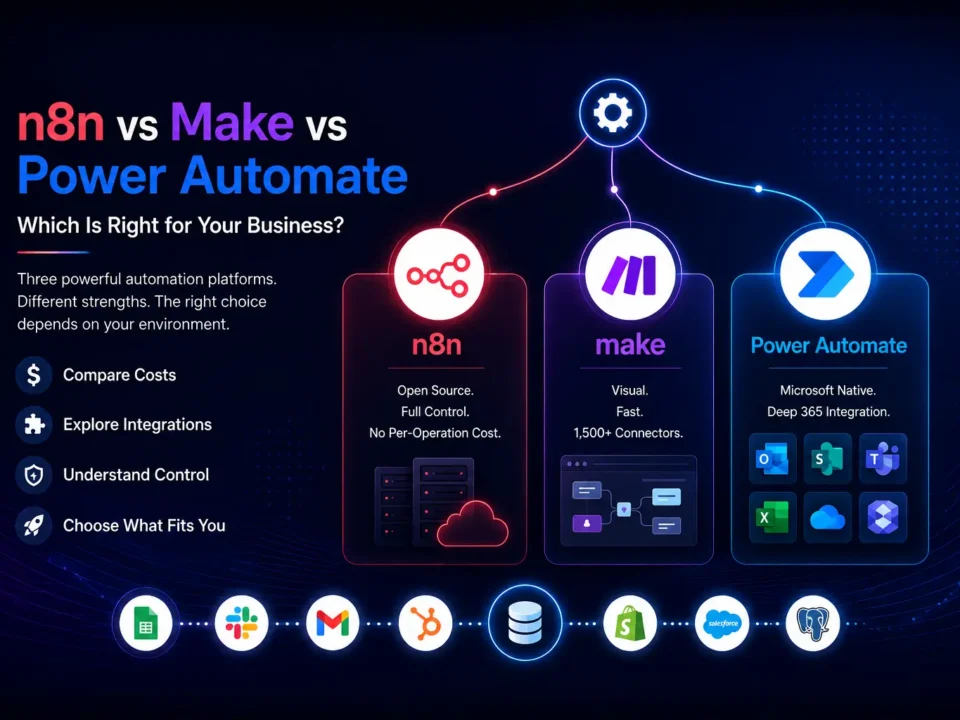
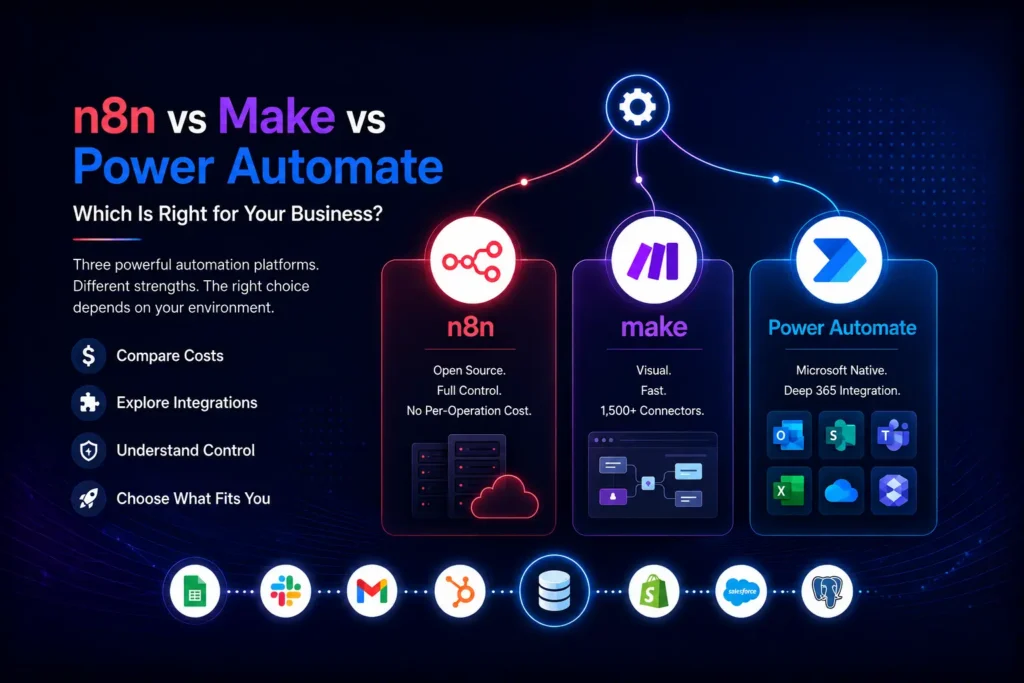
Ask the partner: which systems have you integrated with Odoo in recent implementations? Do you build custom APIs when a connector does not exist? How do you approach workflow automation connecting Odoo to external systems?
A comprehensive partner will name specific integration projects and tools — not just 'we can integrate with anything via APIs.'
Question 7: How Do They Approach the Initial Workflow Mapping?
The most common failure mode in Odoo implementations is configuring the system before properly understanding how the business actually operates. Partners who jump to configuration without thorough workflow mapping produce systems that sort-of-work but require constant workarounds.
Ask the partner: what does your discovery phase look like? How do you map our existing workflows before configuring a single module? What is the output of the discovery phase — is it documented and agreed before build begins?
A good answer involves dedicated workflow mapping sessions with stakeholders from each operational area, documented process maps and a configuration blueprint agreed before any development work starts.
Industry experience is not a bonus. It is the difference between an ERP configured for how your business actually operates and one adapted from a generic template.
One More Thing — Reference Clients
Beyond the seven questions, ask for reference clients in your industry. Not case studies written by the partner — actual clients you can speak with. A partner who is confident in their work will provide this without hesitation. A partner who hedges, offers only written case studies, or provides references only in unrelated industries is giving you important information.
Is a certified Odoo partner always better than an unofficial one?
Certification indicates that the partner has met Odoo's training and compliance requirements, which is a baseline signal. However, certification level alone does not determine implementation quality. An experienced Gold partner with generic implementations may produce worse outcomes than a smaller, highly specialised partner with deep industry expertise. Use the seven questions above to evaluate capability, not just certification.
How important is geographic proximity for an Odoo implementation?
Less important than it used to be. Most implementation work — workflow mapping, configuration, testing, training — is conducted effectively remotely. What matters more is time zone overlap for support and the partner's availability for go-live week. A partner in a significantly different time zone with poor support SLAs is more problematic than a remote partner with strong availability.
What should an Odoo implementation timeline look like?
A standard modular implementation is typically 8-12 weeks from discovery to go-live. Custom module development or AI automation projects run 12-16 weeks. Be wary of partners who quote unusually short timelines without a detailed scoping exercise — and be equally wary of very long timelines without clear milestone definitions.
Frequently Asked Questions
Can Odoo completely replace Tally for GST filing?
Yes. Odoo handles GSTR-1, GSTR-3B and GSTR-2B reconciliation natively. e-Invoicing to the IRP and e-Way bill generation are also built in. Most businesses we have migrated have retired Tally for all new transactions within 6-12 months of go-live. Some retain Tally as a historical archive.
Does Odoo handle the specific product attributes of polymer trading — grade, MFI, density, packaging?
Yes. Odoo’s product variants system handles multiple attributes per product. You can configure grade, melt flow index, density, colour and packaging as variant attributes — each combination generating a distinct product line with its own pricing, stock and HSN code.
How do we handle buying in MT and selling in KG?
Odoo supports unit of measure conversions with a defined conversion ratio. You receive stock in metric tonnes and it converts automatically to kilograms for sales. The system handles the inventory valuation and costing across the unit conversion correctly.
We buy from international suppliers in USD. Can Odoo handle multi-currency?
Yes. Purchase orders and supplier invoices can be raised in USD or any currency. Odoo records the INR equivalent at the exchange rate on the transaction date, handles forex gain/loss at the time of payment, and produces GST-compliant rupee invoices for domestic sales regardless of the input currency.
What happens to our existing Tally data during migration?
Tally data is not deleted — it is retained as a historical archive. Opening balances, master data (customers, suppliers, products) and recent transaction history are migrated to Odoo. The exact scope of historical migration depends on your requirement — we typically recommend migrating the current financial year’s transactions and retaining older data in Tally for reference.
How long does an Odoo implementation take for a polymer trading business?
A standard implementation covering CRM, Sales, Purchase, Inventory, Accounting and GST typically runs 8-10 weeks from discovery to go-live. If light manufacturing (BOM, production orders) and AI automation (WhatsApp inquiry agent, payment reminders) are included, the timeline extends to 12-14 weeks.